

My family has belonged to various CSAs (Community Supported Agriculture) for over a decade. For several years in Toronto, we hosted a pickup point for Plan B Organic Farms (highly recommend them if you are in one of the areas they service!) on our porch. When we moved to Amherst Island in 2016, it took a couple of years to get back into it. We’ve tried a few different local farms, and last year we split a share with Lorna with our nearest CSA: McClure Eats in Bath. (If you’re curious about what we received over the 2025 season, there is a list at the bottom of the blog.)
Why a CSA? Part of it has to do with buying directly from the farmers, but there’s more to it. We love fresh, local food and want to support sustainable farming as well. Let’s talk CSAs: what it is, benefits, strategies for success, and some fantastic local options. It does come with risks: last year the early rain and later drought ruined our farmer’s corn crop so there was no corn.
What is a CSA?
A CSA is a farm share program where members (consumers) commit to buying a season’s worth of produce directly from a local farm, in advance. This allows the farmers to fund the seeds and everything involved in getting it all growing for the season. In return, members receive weekly or bi-weekly boxes filled with fresh, seasonal produce. CSAs offer a great way to eat locally, support small-scale farmers, remove the middle man, and enjoy high-quality ingredients straight from the farm to your table.
How to Successfully Use Your CSA
To make the most of your CSA subscription, here are some helpful tips:
Plan Your Meals Around Your Box – Each week, you’ll receive a different variety of produce. Before heading to the grocery store, plan meals around what’s in your CSA box.
Be Open to Trying New Foods – CSAs often include less common vegetables like kohlrabi, sunchokes, or golden beets. Embrace the adventure and look up recipes for any unfamiliar items.
Store Produce Properly – Keeping veggies fresh is key to minimizing waste. For a handy guide on proper storage, check out these resources:
Batch Cook or Preserve Extras – If your box includes more than you can eat in a week, consider freezing, pickling, or making soups and sauces to enjoy later.
Engage with Your Farmer – Many CSAs offer newsletters, recipe ideas, and farm visits. Connecting with your farmer helps you learn more about where your food comes from and how it’s grown.
Local CSA Farms in the Kingston Ontario Area
If you’re ready to join a Kingston CSA, here are some great local farms offering memberships:
- Fat Chance Farmstead (Harrowsmith, ON)
Season Length: 18 weeks starting mid-June
Vegetables: 30+ varieties, including staples like carrots and tomatoes, as well as unique offerings like chard and kohlrabi.
Extras: Fresh strawberries in June and July.
- Main Street Urban Farm (Kingston, ON)
Season Length: Weekly or bi-weekly subscriptions
Unique Offerings: In addition to vegetables, they provide ferments, prepared foods, and specialized items like Thai curry ingredients.
- McClure Eats (Bath, ON)
Season Length: 17 weeks starting mid-June
Extras: Includes a small bouquet of flowers in every box.
- Rooted Oak (Brockville, Gananoque, Kingston, Merrickville, N. Augusta, Ottawa)
Small (bi-weekly), regular (weekly) and large (weekly or bi-weekly) options
Season Length: 18 weeks
Numerous pickup spots
- Root Radical Farm (Kingston & Gananoque)
Season Length: 24 weeks (June to November)
Extras: Access to a recipe archive, farm events, and storage guides.
- Salt of the Earth Farm (Kingston & Lyndhurst)
Season Length: 18 weeks (June 18 – October 15)
Extras: Flowers, herbs, and seasonal variety in each weekly box.
Tips for Success: Morgan’s CSA Success Guide
Is a CSA Right for You?
A CSA might be a great fit if:
You enjoy cooking at home and experimenting with new ingredients.
You want fresh, high-quality, organic produce.
You appreciate knowing where your food comes from and connecting with farmers.
You like supporting local businesses, cutting out the middle man, and sustainable agriculture.
You’re willing to adjust your meal planning around what’s in season.
If you’re looking for an alternative to grocery store produce and want to make a commitment to fresh, local food, a CSA is a fantastic choice. Whether you’re an experienced home cook or just starting to explore farm-fresh ingredients, joining a CSA can bring exciting new flavours to your kitchen while supporting your local farming community. And if you don't think you can eat all of that food? Find someone to split your share with! We've done that for a few years with great success.
Ready to sign up? Explore the farms above and find the best CSA fit for your household. And come June, bon appétit!
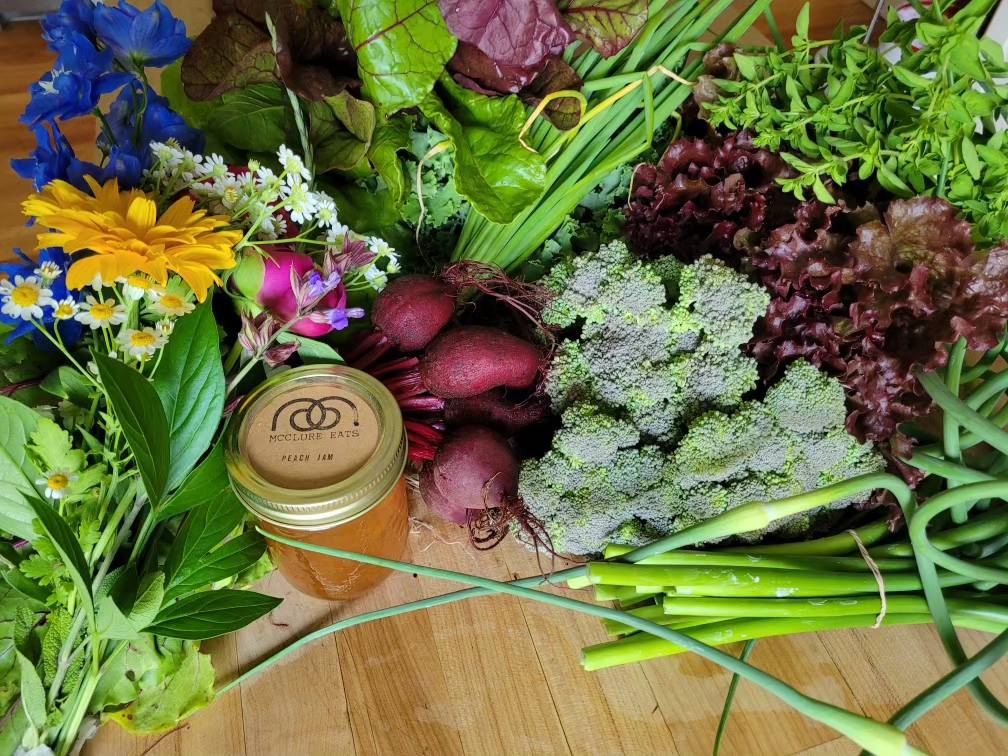
Photos used with permission from McClure Eats.
Want some ideas on how to use your veggies? Check these out:
https://www.prevention.com/food-nutrition/healthy-eating/a20453908/how-to-use-csa-veggies/
https://www.buzzfeed.com/rachelysanders/confusing-scary-csa-vegetables-recipes
https://www.thekitchn.com/tips-for-getting-the-most-out-147351
Happy local eating!
Lynn
Our 17 weeks of 2025 full shares from McClure Eats included the list below. Usually they include corn but there was none because the heavy rain in spring and drought later.
Apples
Baby eggplant
Basil
Beans
Beets
Bok choy
Cabbage
Carrots
Celery
Cucumber
Eggplant
Flowers
Garlic
Garlic scapes
Green coriander
Green onion
Ground cherry
Kale
Lettuce
Mixed herbs
Nappa cabbage
Oregano
Peas
Peppermint
Potatoes
Red onion
Rosemary
Snow peas
Squash
Stone fruit
Swiss chard
Thyme
Tomato
Turnip
Zucchini